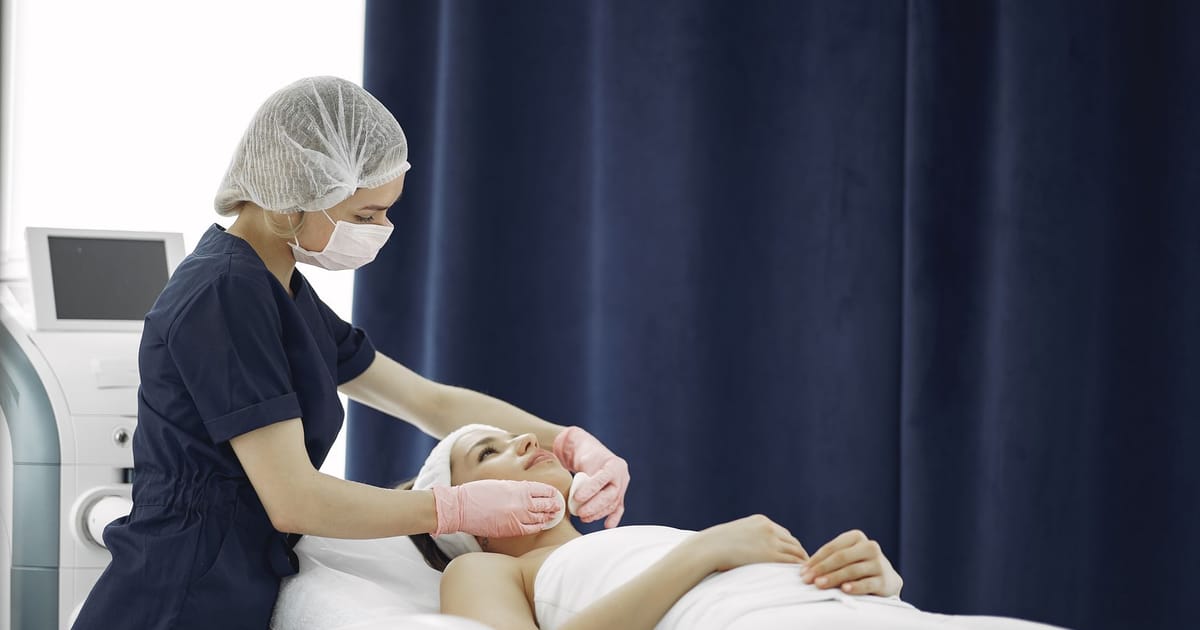
A standard facial follows a predictable sequence: consultation and skin analysis, cleanse, exfoliation, optional extractions, facial massage, mask, serums and moisturizer, and SPF. The whole process takes 50 to 60 minutes on average, according to the Associated Skin Care Professionals (ASCP), and is performed by a licensed esthetician. First-timers typically leave with smoother skin and a clear sense of what their skin needs next.
What Happens During a Facial, Step by Step
Knowing the sequence in advance makes the experience far less mysterious. Here is what your esthetician will move through during a standard facial, and what each step actually involves.
Step 1: Consultation and Skin Analysis
Before anything touches your face, your esthetician will ask you a short series of questions. They want to know your skin concerns (dryness, congestion, sensitivity, breakouts), any products you use regularly, medications that affect your skin, and whether you are pregnant. This is also the moment to mention retinoids, AHAs, BHAs, or any prescription topicals -- they directly influence which products and techniques are safe to use on you that day.
Many estheticians also use a magnifying lamp or Wood's lamp to examine your skin up close. This lets them see texture, pore size, dehydration patterns, and pigmentation that are not obvious in normal light. The information shapes every product choice they make for the rest of your appointment.
Mention Retinoids and Medications at Booking
Tell the spa about prescription retinoids, Accutane, or skin-sensitizing medications when you book -- not just at the consultation. Some protocols require a pause of several weeks before certain treatments are safe. A quick note when scheduling avoids surprises on the day.
Step 2: Cleansing
Your esthetician applies a cleanser appropriate for your skin type and works it gently across your face, neck, and sometimes decolletage. This removes surface oil, residual makeup, and environmental debris. The cleanse is unhurried and usually feels like the most relaxing part of the opening sequence.
Step 3: Exfoliation
Exfoliation removes the outer layer of dead skin cells to help the products applied afterward absorb more effectively. Estheticians use one of two general approaches: a manual exfoliant (a gentle scrub or enzyme mask massaged across the skin) or a mild chemical exfoliant (a low-concentration AHA or BHA solution applied and then removed after a set time). Which approach your esthetician chooses depends on your skin type and what you discussed during the consultation.
Enzyme exfoliation in particular tends to feel warm and slightly tingly but not uncomfortable. Chemical exfoliation at facial-service concentrations is much lower strength than a clinical chemical peel -- if you want a comparison, Facial vs Chemical Peel: Which Treatment Is Right for You? walks through the key differences in depth.
Step 4: Extractions (Optional)
Extractions are the manual removal of blackheads, whiteheads, and congestion from pores. A licensed esthetician uses their fingertips wrapped in tissue, a metal comedone extractor, or sometimes gentle suction to clear each pore individually.
This is the step most first-timers feel nervous about, and the concern is understandable. Extractions do involve pressure and can cause a brief stinging or pinching sensation, particularly on the nose, chin, and forehead where pores are typically largest. The discomfort is short-lived -- each individual extraction lasts only a second or two -- and your esthetician will check in with you throughout.
Extractions are always optional. You can decline them entirely, ask for a partial session on specific areas only, or set a comfort threshold and have your esthetician stop when it becomes too much.
Redness After Extractions Is Normal and Temporary
Some redness, minor swelling, or small pink marks around treated pores are a completely normal response to extractions. The inflammation typically fades within a few hours and is usually gone by the following morning. Avoid pressing or picking at the treated areas in the hours after your appointment.
Step 5: Facial Massage
After extractions (or in their place, if you declined them), your esthetician applies a facial oil or cream and works through a series of massage movements across the face, neck, and often the scalp or shoulders. Facial massage is designed to improve circulation and support lymphatic drainage, and most clients describe it as the most enjoyable part of the treatment.
The movements vary by esthetician and training, but typically include gentle effleurage (long gliding strokes), light tapotement (tapping), and pressure-point holds. The effect is warming and deeply relaxing. Many clients fall asleep during this step.
Step 6: Mask
Your esthetician applies a mask matched to your skin type and the goals of the treatment. Common types include clay masks (for oily or congested skin), hydrating sheet or cream masks (for dry or dehydrated skin), and brightening enzyme masks. The mask is left on for 10 to 15 minutes while you rest.
Some higher-end facials layer masks -- applying a targeted treatment to specific zones (a clay mask on the T-zone, a hydrating mask on the cheeks) -- but a standard facial typically uses a single formula across the full face.
Step 7: Serums and Moisturizer
After the mask is removed, your esthetician applies a targeted serum, eye cream, and moisturizer. These products are chosen based on what came up during the skin analysis and are applied in the correct layering order to maximize absorption. This is also when your esthetician may walk you through what they used and why, which can be genuinely useful information for your home routine.
Step 8: SPF
A facial almost always ends with sunscreen. Exfoliation and extractions temporarily increase skin sensitivity to UV damage, so finishing with SPF is a clinical necessity, not an afterthought. Your esthetician will apply it before you leave the treatment room.
Quick Reference: The Full Facial Sequence
| Facial Step | What Happens | How It Feels |
|---|---|---|
| Consultation and skin analysis | Questions about concerns, products, and medications; magnifying lamp review | Conversational; takes 5-10 minutes |
| Cleanse | Cleanser worked across face, neck, and decolletage | Gentle and warm |
| Exfoliation | Enzyme, scrub, or mild chemical exfoliant removes dead skin cells | Slightly tingly or warm; not painful |
| Extractions (optional) | Manual removal of blackheads and clogged pores | Brief pinch or sting per pore; optional |
| Facial massage | Oil or cream applied; gliding and pressure movements | Relaxing; many clients fall asleep |
| Mask | Treatment mask left on 10-15 minutes based on skin type | Cooling (clay) or warm (hydrating) |
| Serums and moisturizer | Targeted actives applied in layering order | Lightweight; skin may feel visibly plumper |
| SPF | Sunscreen applied to protect sensitized skin | Standard sunscreen texture |
How Long Does a Facial Take?
The treatment itself -- from the cleanse through SPF -- takes 50 to 60 minutes for a standard facial, according to the ASCP. Many spas also offer 75- or 90-minute versions that allow more time for massage and masking.
What surprises first-timers is that the total time commitment is longer. Arrive 10 minutes early to complete intake forms and change into a robe or headband. After the treatment, you will likely speak briefly with your esthetician about home care recommendations before checking out. Budget 90 minutes total for your first appointment so you do not feel rushed.
For context on pricing by treatment length, How Much Does a Facial Cost? breaks down national averages by service tier.
What to Do Before Your Facial
A little preparation makes a meaningful difference in what you get out of the appointment.
Pause sensitizing products in advance. Stop using retinoids, retinol, AHAs, BHAs, or benzoyl peroxide at least 48 to 72 hours before your appointment. The AAD notes that these ingredients increase skin cell turnover and UV sensitivity -- combining them with a facial's exfoliation step can lead to irritation or uneven product absorption. If you use prescription tretinoin or are on Accutane, let the spa know when you book so they can advise on a safe pause period.
Arrive with clean-ish skin. You do not need a full at-home facial cleanse before you arrive -- your esthetician will cleanse you thoroughly as step one. But if you have heavy sunscreen, tinted moisturizer, or multiple layers of skincare on, removing it beforehand saves time and lets the skin analysis be more accurate.
Mention anything relevant at the consultation. Active breakouts, rosacea, eczema, psoriasis, cold sores, or recent cosmetic procedures (laser, injectables, microneedling) all affect what your esthetician can safely do. Pregnancy also matters -- certain ingredients and techniques are contraindicated. There is no need to feel awkward about sharing this information; your esthetician needs it to do their job safely.
First-Timer Checklist Before You Go
-- Stop retinoids and strong exfoliants 48-72 hours out. -- Note any prescription topicals, medications, or skin conditions. -- Drink normally -- hydrated skin responds better to treatment. -- Skip the gym the morning of if you tend to sweat heavily. -- Arrive about 10 minutes early for intake forms.
What to Do After Your Facial
The 24 hours after a facial are when your skin is most open and reactive. A few simple habits protect the results.
Apply SPF before you leave and for the rest of the day. Your skin is more vulnerable to UV damage following exfoliation. Apply a broad-spectrum SPF 30 or higher even if it is overcast.
Hold off on heavy makeup. If you had extractions, your pores are freshly cleared and temporarily more open. Applying a thick foundation within a few hours risks introducing bacteria and undoing part of what the facial accomplished. A light mineral powder is usually fine; heavy liquid or cream formulas are better avoided for at least 12 hours.
Avoid strong heat and sun. Steam rooms, saunas, intense exercise that causes heavy sweating, and direct sun exposure are best skipped for the remainder of the day. The ASCP recommends this as a general guideline for any professional skin treatment.
Resume retinoids and exfoliants after 24 to 48 hours. Most estheticians recommend waiting a full day before reintroducing active ingredients to your routine. Your esthetician may advise a longer pause if the treatment was more intensive.
Drink water. Hydrated skin heals more efficiently. The advice is simple enough to be easy to overlook, but it does matter.
Wondering about gratuity after your service? How Much to Tip at a Spa covers esthetician tipping norms in detail.
How to Choose Your First Facial
The spa menu can feel overwhelming when you are booking for the first time. Most spas list half a dozen or more facial options -- hydrating, anti-aging, brightening, acne, oxygenating, and so on. For a first visit, ignore most of that.
Book the basic or classic facial. Call it by whatever name the spa uses -- "signature facial," "classic facial," "European facial" -- but look for the standard 50- to 60-minute option that includes cleanse, exfoliation, extractions, massage, mask, and moisturizer. This is the foundational treatment. It gives your esthetician enough time to properly assess your skin, and you will come away with a clear picture of what more targeted treatments might help you next.
Look for a licensed esthetician. Confirm that the person performing your facial holds a current esthetician license in the state. Esthetician licensing requirements vary, but the ASCP notes that most states require 260 to 1,500 hours of accredited training. A quick check on the spa's website or a direct question when booking is reasonable and completely appropriate.
Avoid specialty treatments for your first appointment. Microdermabrasion, ultrasound, LED light therapy, high-frequency treatments, and medical-grade peels all have their place -- but they are better choices once you and your esthetician have an established sense of how your skin responds. If you are curious about a more clinical option, Facial vs Chemical Peel: Which Treatment Is Right for You? is a useful comparison before you book.
How Often Should You Get a Facial?
The ASCP commonly recommends once per month -- every 28 to 30 days -- as a maintenance schedule for most skin types. That interval aligns roughly with the skin's natural cell-turnover cycle, meaning each session works with freshly emerging skin rather than simply retreating the same surface layer.
That said, the right frequency depends on your goals and your skin's condition. Someone addressing persistent congestion or hyperpigmentation may benefit from closer spacing initially, then transition to monthly maintenance once the concern improves. Someone with sensitive skin or rosacea may find every six to eight weeks is more comfortable. Your esthetician is the right person to give you a personalized recommendation after your first appointment.
For the broader picture of how professional treatments fit into a wellness rhythm, How Often Should You Get a Massage? offers a parallel look at frequency guidance for massage services.
What to Remember as a First-Timer
A facial follows a consistent sequence every licensed esthetician is trained to perform. The steps build on each other: cleansing and exfoliation prepare the skin so serums and moisturizer can actually absorb. Extractions are optional, always brief, and the mild redness they cause typically resolves by morning. The most useful thing you can do before your appointment is pause retinoids for 48 to 72 hours and share your full skin history at the consultation. After that, you can let your esthetician do their job.
Frequently asked questions
How long does a facial appointment take?
A standard facial takes 50 to 60 minutes from the time you lie down, though many spas schedule a 75- or 90-minute version. Add 10 to 15 minutes at each end for intake forms, changing, and checkout. Budget around 90 minutes total for your first visit to avoid feeling rushed.
Do facials hurt?
Most of a facial feels soothing. The exception is extractions -- the manual removal of blackheads or clogged pores -- which can feel like a brief pinch or sting. Your esthetician will ask before performing them, and you can decline. Any mild discomfort during extractions passes quickly.
What should I avoid before a facial?
Avoid applying retinoids, exfoliants, or AHAs/BHAs for at least 48 to 72 hours before your appointment. Let your esthetician know about any active skin conditions, allergies, or medications that affect skin sensitivity. Arrive with your skin as clean as possible, though a full cleanse at home is not necessary.
How soon after a facial can I wear makeup?
Most estheticians recommend waiting at least 12 hours before applying heavy or full-coverage makeup, especially if you had extractions. If you need to wear something, a light mineral powder is generally considered safer than liquid foundation, which can clog freshly opened pores.
How often should you get a facial?
The Associated Skin Care Professionals (ASCP) notes that once a month -- roughly every 28 to 30 days, which mirrors the skin's natural cell-turnover cycle -- is a common recommendation for maintenance. If you are targeting a specific concern such as congestion or uneven tone, your esthetician may suggest a shorter interval initially.