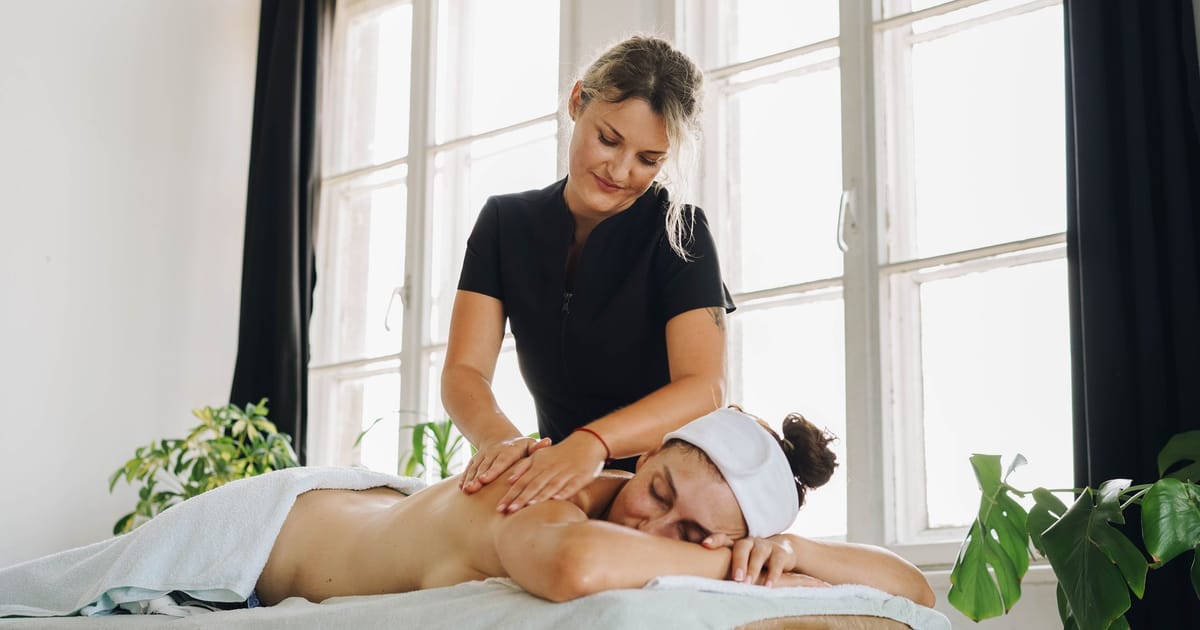
A massage in the US typically costs between $60 and $200 for a 60-minute session, according to data from the American Massage Therapy Association (AMTA) and the International SPA Association (ISPA). The wide range reflects differences in setting -- franchise chains sit at the lower end, luxury resort spas at the upper -- as well as therapist experience, geographic market, and session length.
Price by Setting: The Biggest Factor in What You Pay
Where you book your massage shapes the price more than almost anything else. The Associated Bodywork and Massage Professionals (ABMP) notes that the US massage market spans a broad spectrum of provider types, each with a distinct pricing model.
Franchise and Chain Studios
National chains such as Massage Envy, Hand and Stone, and Elements Massage are designed around high volume and standardized service. Walk-in rates for a 60-minute session typically run $90 to $120, according to publicly listed pricing from these providers. Member rates -- which require a monthly contract -- generally drop that figure to $60 to $80 per session. If you plan to get a massage monthly and prefer consistency, a franchise membership can offer predictable pricing and convenient locations.
Independent Licensed Massage Therapists
An independent LMT working out of a private office or small studio usually charges $80 to $130 for a 60-minute session, based on AMTA member survey data. That range is broader because solo practitioners set their own rates based on their local market, overhead costs, and experience level. Many independent therapists also offer package pricing -- for example, three sessions for the price of two and a half -- which brings the effective per-session cost down.
Day Spas
Day spas bundle massage into a broader menu of skincare, body, and nail services. A 60-minute massage at a mid-range day spa typically costs $90 to $150, based on ISPA industry pricing data. The premium over a franchise or independent therapist often reflects the full facility experience: locker rooms, relaxation lounges, robes, and bundled amenities. If you are comparing options, our guide to average spa treatment prices can help you see where massage fits within a full spa menu.
Luxury and Resort Spas
Hotel and resort spas operate with significantly higher overhead, and their prices reflect that. A 60-minute massage at a luxury resort spa commonly runs $150 to $250 or more, according to ISPA data on spa revenue benchmarks. Some destination spas add a mandatory service charge -- separate from a tip -- that can add 18 to 22 percent on top of the listed price. Read the fine print before booking.
Mobile and In-Home Massage
Therapists who travel to your home or hotel room typically charge a premium of $20 to $50 over their standard studio rate to cover travel time, fuel, and the logistics of setting up portable equipment. On-demand platforms that broker in-home massage sessions -- such as Zeel and Soothe -- price 60-minute sessions at roughly $100 to $160 in most US metro areas, based on their publicly listed rate structures.
Summary Table
| Setting | Typical 60-min price range | Notes |
|---|---|---|
| Franchise / chain (walk-in) | $90 -- $120 | Member rates $60 -- $80; monthly contract required |
| Independent LMT | $80 -- $130 | Widest variation; depends on market and experience |
| Day spa | $90 -- $150 | Includes facility amenities; packages common |
| Luxury / resort spa | $150 -- $250+ | May include mandatory service charge |
| Mobile / in-home | $100 -- $160 | Travel premium of $20 -- $50 above studio rate |
Source: AMTA member surveys; ISPA U.S. Spa Industry Study; provider publicly listed rates.
Price by Session Length
Most settings offer three standard durations, and price scales roughly -- though not always proportionally -- with time. The figures below represent typical ranges based on AMTA member survey data.
- 30-minute session: $40 to $65. Useful for targeting a single area -- neck and shoulders, lower back -- rather than a full-body treatment.
- 60-minute session: $80 to $120. The most common duration. Enough time for a full-body Swedish or a focused deep-tissue treatment.
- 90-minute session: $120 to $180. Suitable when you want both a full-body pass and extended attention to a problem area, or when you are combining two modalities in a single visit.
A 90-minute session is usually priced at roughly 1.3 to 1.5 times the 60-minute rate rather than 1.5 times exactly -- therapists often reduce the per-minute rate slightly for longer bookings, which makes upgrading a reasonable value if your schedule allows.
Book longer, pay less per minute
If you are choosing between a 60- and 90-minute session, ask your therapist whether they can address your main concern fully in 60 minutes. If the answer is borderline, upgrading is often better value than booking a second 60-minute session later in the month.
How Massage Type Affects Price
Not all massage modalities are priced the same. Swedish massage -- the most common entry point -- is generally priced at a setting's base rate for a given duration. Techniques that require additional training or specialized equipment often carry a surcharge.
Common price modifiers, based on typical provider pricing:
- Hot stone massage: add $20 to $40. Requires additional setup time and heated equipment.
- Deep tissue: often the same base price as Swedish at chains, but independent specialists in neuromuscular or myofascial work may charge 10 to 25 percent more.
- Prenatal massage: a $10 to $20 surcharge is common, reflecting the specialized positioning equipment and training required.
- Lymphatic drainage: frequently priced higher than general massage, often $100 to $160 for 60 minutes, because the technique requires specific certification.
- Couples massage: two therapists working simultaneously in one room typically adds $20 to $50 per person over the solo rate; see our guide on couples massage cost for a full breakdown.
To understand the practical differences between the two most commonly booked modalities before you decide which to book, our Swedish vs deep tissue massage comparison covers what each treatment involves and who benefits from each.
Specialty modalities and credentials
When booking a specialty massage -- lymphatic drainage, craniosacral therapy, prenatal massage -- ask whether the therapist holds specific certification in that modality beyond their general LMT license. A general license qualifies a therapist to practice massage; specialty certifications indicate post-licensure training in a particular technique.
Add-Ons and Upgrades
Spas and studios frequently offer enhancement menus that can meaningfully increase the final bill:
- Aromatherapy: $10 to $20, typically. The therapist diffuses essential oils in the room or applies a diluted blend topically.
- CBD oil upgrade: $15 to $30 at providers that offer it, though evidence for topical CBD's effectiveness over standard massage oil is limited.
- Scalp massage or hot towel service: $10 to $25.
- Foot scrub or exfoliation add-on: $15 to $35.
Add-ons are optional and rarely necessary for a good session. If you are new to massage, skip the extras on your first visit and evaluate the base service before adding cost.
Therapist Experience and Location
Two factors that influence price regardless of setting are therapist experience and your local market.
Experience Level
A recently licensed therapist may charge $60 to $80 for a 60-minute session, while a therapist with 10 or more years of experience or advanced specialty training in areas like neuromuscular therapy or sports massage commonly charges $120 to $160 or more, according to AMTA wage and pricing surveys. That premium is generally earned -- experienced therapists tend to have refined technique, better therapeutic assessment skills, and specialized knowledge of musculoskeletal patterns. If you are seeking massage for a chronic pain condition rather than general relaxation, prioritizing experience over cost is usually worthwhile. Our guide to how to choose a massage therapist covers what credentials to verify and what questions to ask before booking.
Geographic Market
Cost of living shapes massage pricing significantly. In major metro areas with high rent -- New York City, San Francisco, Boston -- independent LMT rates of $130 to $180 for a 60-minute session are common. In mid-size markets and rural areas, the same caliber of therapist may charge $70 to $100. This reflects therapist overhead and local wage norms, not necessarily a difference in quality.
Do not let a low price substitute for verifying licensure
Regardless of what you pay, confirm that your therapist holds a current LMT license in your state before booking. Most states publish a public license lookup through their department of health or board of massage therapy. Licensure requires completing 500 to 1,000 hours of accredited training and passing the MBLEx exam administered by the Federation of State Massage Therapy Boards (FSMTB). An unlicensed practitioner carries real safety risk, regardless of how well-reviewed they appear online.
Membership Models vs. Per-Session Pricing
Monthly membership programs are the primary pricing innovation in the massage industry over the past two decades, pioneered by franchise chains and now offered by many independent spas and therapists.
How Memberships Work
A typical chain membership costs $50 to $70 per month and includes one 60-minute session. The effective savings over the walk-in rate of $90 to $120 amounts to $20 to $50 per session -- meaningful if you attend consistently. Many programs allow unused sessions to roll over one month, and most offer discounted rates on additional sessions and on massage upgrades or products.
The catch is contractual commitment. Most memberships require 6 to 12 months of enrollment and charge a cancellation fee if you exit early. Before signing, verify: Can unused sessions be transferred to someone else? What is the exact cancellation procedure? Are there blackout periods or booking restrictions during peak times?
Independent Prepay Packages
Many independent therapists offer their own version of a membership: a block of sessions prepaid at a discount, without a recurring contract. A common structure is five 60-minute sessions for the price of four. This approach offers savings without the commitment or cancellation risk of a formal membership.
Which Makes More Sense
If you can commit to monthly massage and prefer a specific therapist at a chain location, a membership offers real savings. If your schedule is irregular or you want flexibility across different therapists and modalities, prepay packages from an independent LMT -- or simply paying per session -- keep you from paying for sessions you do not use.
Tipping: The Cost Factor People Often Forget
A massage tip is a meaningful addition to the final cost and is considered standard practice at most spas, studios, and independent therapists.
The typical range is 15 to 20 percent of the pre-tax service price, based on professional etiquette guidance from AMTA. On a $100 session that is $15 to $20. On a $150 session, expect $22 to $30.
Some nuances worth knowing:
- If your therapist owns the studio outright, tipping is appreciated but not expected in the same way as when the therapist is an employee sharing their earnings with a spa.
- At chains, therapists typically keep the tip in full even when a portion of the service fee is retained by the employer. Tipping in cash ensures the therapist receives it directly.
- Mandatory service charges at luxury resort spas are not the same as a tip. Check whether the charge goes to the therapist before adding an additional gratuity.
For a full breakdown of tipping norms across different spa services, see our guide on how much to tip at a spa.
Plan your full budget before you arrive
When estimating what a massage will cost, add the session price + tip (15 to 20 percent) + any add-ons you intend to book. A $95 session with a lavender aromatherapy upgrade ($15) and a 20 percent tip ($22) totals about $132 out of pocket. Knowing the real number in advance prevents sticker shock at checkout.
Insurance, HSA, and FSA Coverage
General relaxation massage is not covered by health insurance in the US. However, there are legitimate paths to coverage or tax-advantaged reimbursement in specific situations.
When Health Insurance May Apply
A small number of health insurance plans cover massage therapy when it is prescribed by a licensed medical provider and documented as treatment for a qualifying condition. Common qualifying situations include:
- Chronic low back pain or neck pain
- Anxiety or stress-related disorders (in plans that integrate mental and physical health benefits)
- Recovery from musculoskeletal injury
- Temporomandibular joint (TMJ) disorder
Coverage is far from universal. Call your insurer before booking and ask specifically whether massage therapy is a covered benefit, what documentation is required (prescription, diagnosis code, licensed provider credentials), and whether the therapist must be in-network. Approval is more common with medical group plans and less common with individual marketplace plans.
HSA and FSA Reimbursement
Health Savings Accounts (HSA) and Flexible Spending Accounts (FSA) can be used to pay for massage therapy when the massage is prescribed by a qualified medical provider for treatment of a documented medical condition -- the same standard as insurance. The IRS requires that HSA and FSA funds cover only qualified medical expenses, and a prescription or Letter of Medical Necessity from your physician is typically required for reimbursement.
Keep your prescription, the therapist's license information, and your receipts on file. Many HSA and FSA administrators will request documentation before approving reimbursement, and requirements vary by plan administrator.
A relaxation massage booked without a medical prescription does not qualify under standard IRS guidance, regardless of its wellness benefits.
What you will realistically spend
A single 60-minute massage at a mid-range setting -- a day spa or independent LMT -- in most US markets will cost $90 to $130 before tip. With a 20 percent gratuity, budget $108 to $156 total. Monthly membership at a chain brings that per-session cost down to $70 to $90 including tip. If you are seeking massage for a medical condition and have a prescription, check with your HSA administrator or insurer -- you may recover part of that cost through your benefits.
Frequently asked questions
How much does a 60-minute massage cost on average?
According to the American Massage Therapy Association (AMTA), the national average for a 60-minute massage session is roughly $80 to $120. Prices are lower at franchise chains and higher at luxury resort spas, with independent licensed massage therapists typically falling in the middle of that range.
How much should you tip for a massage?
The standard tip for a massage at a day spa or independent therapist is 15 to 20 percent of the pre-tax service price. On a $100 session that works out to $15 to $20. Tipping is not required when your therapist owns the studio, though it is always appreciated. See our full tipping guide for more detail.
Can I use an HSA or FSA to pay for a massage?
Yes, in some cases. An HSA or FSA can cover massage therapy when a licensed medical provider prescribes it as treatment for a documented condition -- such as chronic back pain, anxiety disorder, or musculoskeletal injury. A general relaxation massage without a prescription typically does not qualify. Keep your prescription and receipts on file for reimbursement.
Are massage memberships worth it?
Monthly membership programs at chains like Massage Envy typically cost $50 to $70 per month and include one 60-minute session plus discounts on additional visits. If you realistically attend once a month, the per-session savings of $20 to $40 compared to walk-in rates make them worthwhile. Unused months often roll over, but confirm the cancellation policy before signing.
Does therapist experience affect massage price?
Yes, noticeably. A therapist who has recently passed their MBLEx licensing exam may charge $60 to $80 for a 60-minute session, while a therapist with a decade of clinical experience or advanced certifications in a specialty like neuromuscular therapy or prenatal massage often charges $120 to $160 or more for the same duration.